 Multi
Multi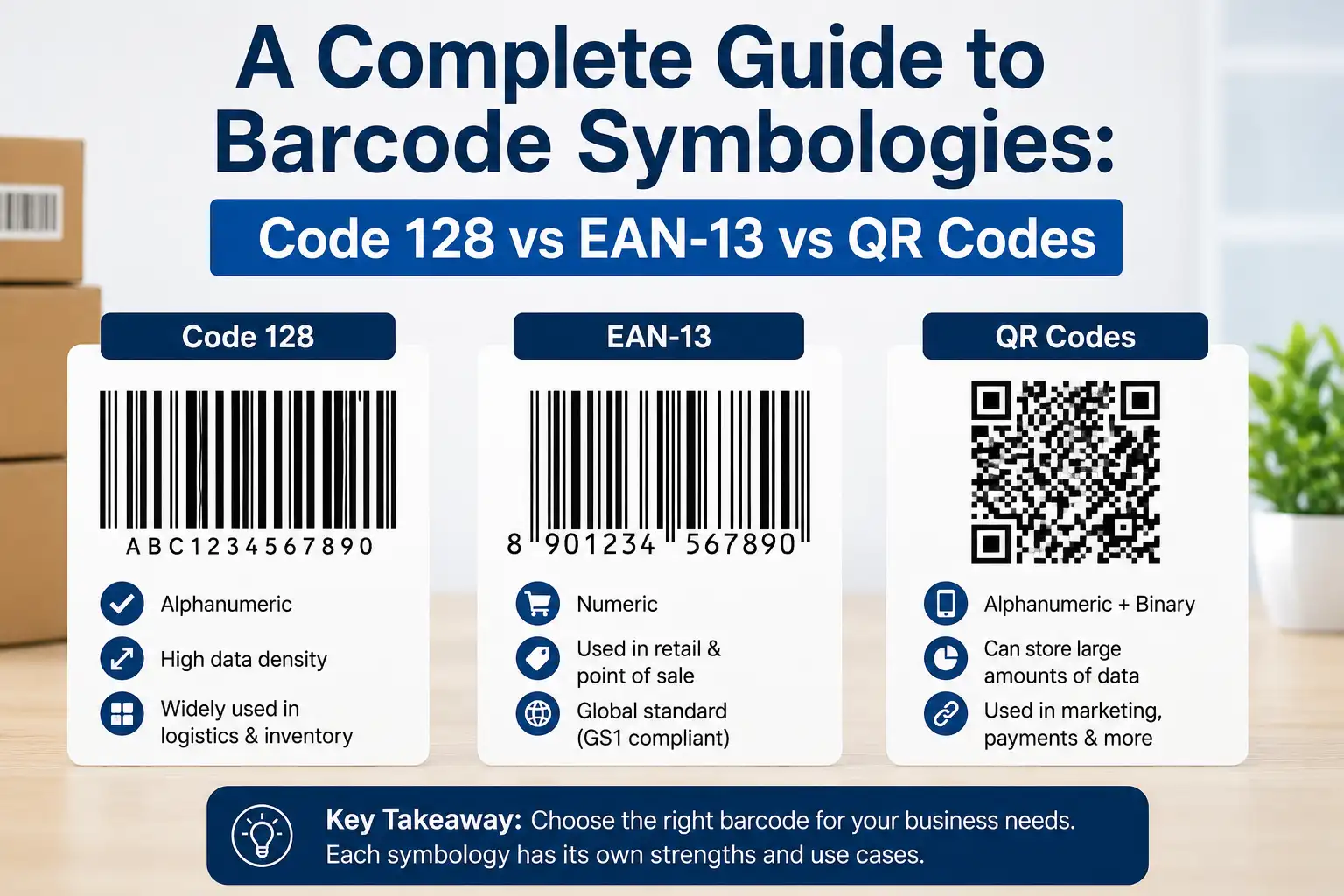
Barcodes are everywhere, powering everything from super-market checkout counters to high-tech pharmaceutical warehouses. However, different industries require different formats (known as symbologies) to store data. In this guide, we compare the three most popular symbologies: Code 128, EAN-13, and QR Codes, helping you select the right format for your next project.
1. Code 128 (Universal Logistics Standard)
Code 128 is a highly dense, linear (1D) barcode format. It is widely used in shipping, transport, and inventory tracking.
- Data Type: Supports all 128 characters of ASCII (letters, numbers, and symbols).
- Best For: Shipping container serial codes, asset tracking, and package routing labels.
- Advantage: Compact length and high data density for linear scanners.
2. EAN-13 (Standard Retail Barcode)
If you look at the back of any product in a grocery store, you will see an EAN-13 barcode. It is the international standard for point-of-sale retail scanning.
- Data Type: Numeric digits only (exactly 13 digits, including a check digit).
- Best For: Commercial retail products sold in physical stores.
- Advantage: Universally recognized by retail scanner hardware globally.
3. QR Codes (2D Matrix Code)
Unlike linear barcodes, Quick Response (QR) codes are two-dimensional. They store data both vertically and horizontally, allowing them to carry hundreds of times more information.
- Data Type: Large alphanumeric text, URLs, binary data, and contact cards.
- Best For: Mobile scanning, website redirection, digital payment codes, and business details.
- Advantage: High error correction (can still be read even if 30% of the code is dirty or damaged).
Summary: Which Should You Generate?
Choose EAN-13 if you are selling a retail product in stores. Choose Code 128 for warehouse boxes, shipping labels, and logistics. Choose QR Codes if you want consumers to scan a code using their smartphones to open a website, review portal, or make a payment.



Comments (0)
Leave a Comment